Documentary film
Remosam—2019 Documentary
Permanent link: https://n2t.net/ark:15056/ofdn-f-000006
About the film
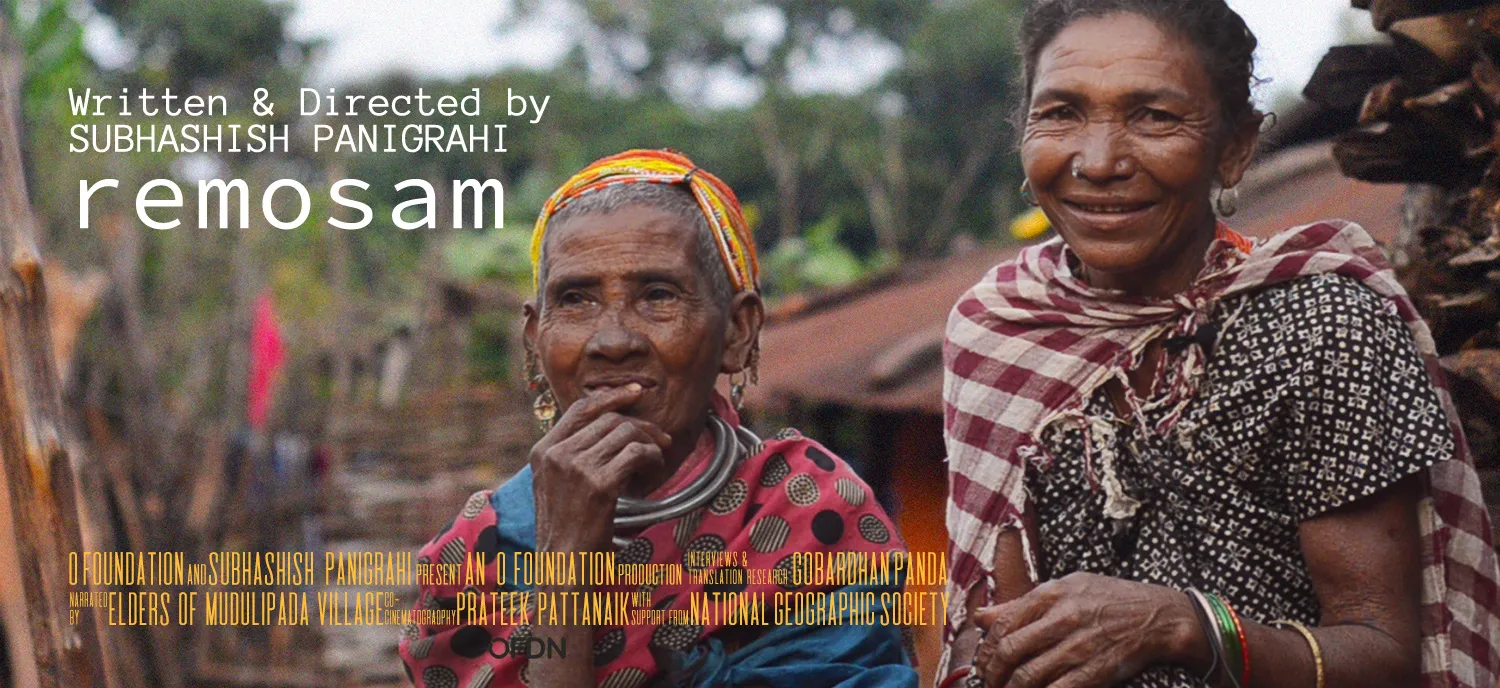
This film takes place in the Mudulipada village of the Malkangiri administrative district in Odisha, India. The stories of harvesting “sapung”, alcohol from the fishtail palm, and fermenting cooked rice to make the “pendom” (rice alcohol) are the recipes that were hardly ever documented in audiovisual media. The interviews could also open a window into the unique customs and rituals of the Bondak community and a unique social system of older women getting married to men younger than them. The local environment and the close relation the Bondak people have with it through their festivals such as “Pusarke” or the wedding ceremonies lit the eyes of many elders as they recollect. Panda also feels at home sitting down and singing the wedding songs that many young Bondak individuals have now forgotten.
The Malkangiri district was formed on October 2, 1992, from the then-undivided Koraput district of the Indian state of Odisha. This southern district of the province is full of natural resources, water being their most precious. It is home to over 617,000 people (Census 2011) of multiple ethnic races, and the Bonda people are one of them who have been living around the Bonda Ghati, a mountainous region, and the Khairput subdivision. Though their population was diminishing until a few years back, mostly because of poverty and lack of healthcare, the 2011 Indian census confirms the Bonda population to be between 9,000–12,000 (Ethnologue 2015). Remosam, the Bonda language, is limited to only about 6,700 people, the “upper-Bondas” who live on the Bonda hills. The “lower-Bondas” that live in the plains are more assimilated with other communities and tend to speak a dialect called Desia, which is a connecting link between the province’s official language Odia and the regional indigenous languages. Remosam has been identified as a severely-endangered language by UNESCO. The low-income Bondak community has extremely low political power and decent access to healthcare and education. There is also an emergence of the self-organised and rebellious Naxalite movement (Sendha 2018), which originally started to protest against rights issues. The intertwining and rather complex factors have affected the growth of the Remosam language. This film attempts to capture a small glimpse of the Bondak community as the current socio-economic hindrances greatly affect any multimedia documentation of the Remosam language. Our hope is that the future generations of the community will have open access to the oral history of their own ancestors when they would need these resources. Even though the language is met with an immediate threat of endangerment, its revival and active use are still hope.
Technical details
| Film type | Documentary Feature |
| Language | Remosam; Odia |
| Spoken Languages | Remosam; Odia |
| Colour Info | Color |
| Frame Rate | 24 fps |
| Aspect Ratio | 2.35:1 |
| Stereoscopy | No |
| Captions | English (Closed Caption), English (Open Caption) |
Treatment
A detailed treatment containing the datasheet, synopsis, and other important details can be downloaded here.
References
Census 2011. District Census 2011. Census2011.co.in. 2011. Retrieved 30 September 2011.
Bonda at Ethnologue (18th ed., 2015)
Sendha, Pallishree. Media Coverage on Women’s Issues. Diss. Central University of Orissa, 2018.
Posters
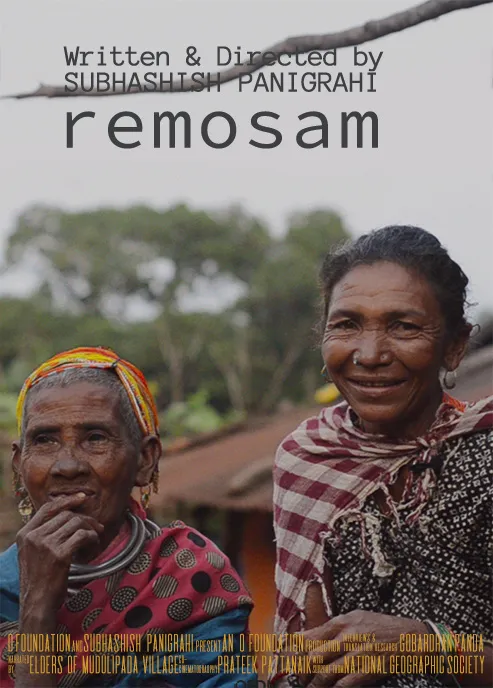
Poster of “Remosam” from a scene where elders Manguli Dhangdamajhi and Kinker Dhangdamajhi sing wedding songs (© Subhashish Panigrahi. CC-BY-SA 4.0)